
Fastest Delivery and Low MOQ Development with Money Back Guarantee...
(213)-426-1030
info@customrubbersiliconemolds.com
Fastest Delivery and Low MOQ Development with Money Back Guarantee...

Low MOQ
Non Sticky
Total Design Support
Lab Tested Food Safe
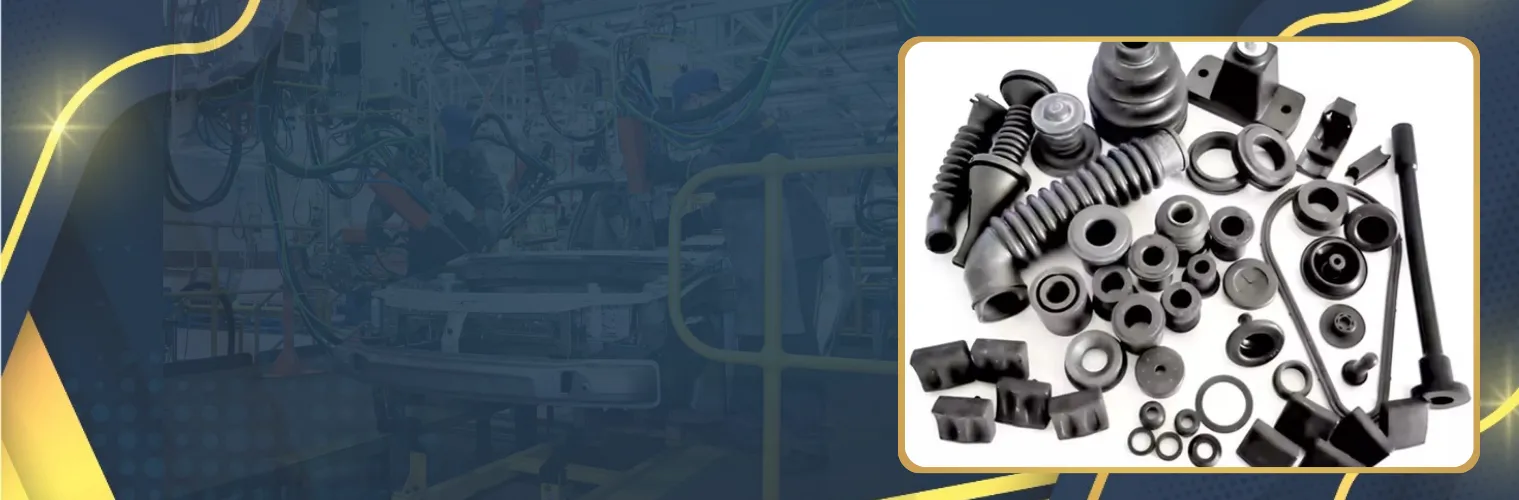
Automotive rubber mold components are especially important in improving the performance and lifespan of vehicles in terms of durability and reliability. These parts are developed to endure excessive temperatures, vibration, exposure to fuel and continuous mechanical stress. Bushing, seals, grommets and engine mounts were created using rubber molding as components that make sure that all the systems of a vehicle are working in a safe and easy manner. Manufacturers obtain high dimensional accuracy and consistency using high-level molding techniques that include compression, transfer, and injection molding. The modern designs in the automobile industry require component designs that will contain a high degree of elasticity, weather resistance and long life in operation thus requiring the special designed rubber compounds.
Molded parts of rubber in the automotive industry also help in reducing noise, vibration, and improving driver comfort. As there are increased demands on sustainability and fuel efficiency, high-performance rubber parts allow the vehicles to have integrity and less maintenance. Quality rubber components are inalienable regardless of whether it is electric vehicle, commercial, or passenger car to fulfill all the requirements of the global industry as well as guaranteeing the best road safety.
Call Us At



Vehicle silicone molded parts are associated with high thermal stability, flexibility, and durability of application. Silicone holds up to high temperatures, as low as freezing, up to heat in the engine chamber, and does not become stiff or lose its elasticity or structural integrity. This has rendered silicone to be the perfect one when used as electrical connectors, engine bay seals, turbocharger hoses, lighting gaskets and battery-system insulators in the contemporary cars. The automotive sector is moving towards silicone more than ever owing to its resistance to chemicals, UV radiation and weathering conditions much more than the conventional elastomers. Molded parts made of silicone also have a better electrical insulation that is vital since vehicles are increasingly relying on highly developed electronics and EVs.
Manufacturers create silicone parts through precision molding methods to ensure ideal dimensional accuracy in the components and provide consistent performance at stress. As well, low toxicity and stable composition of silicone hybrid material makes it appropriate in EV applications where safety and reliability are paramount. Silicone components are used to minimize noise and to ensure safety of sensitive components in high-vibration areas.
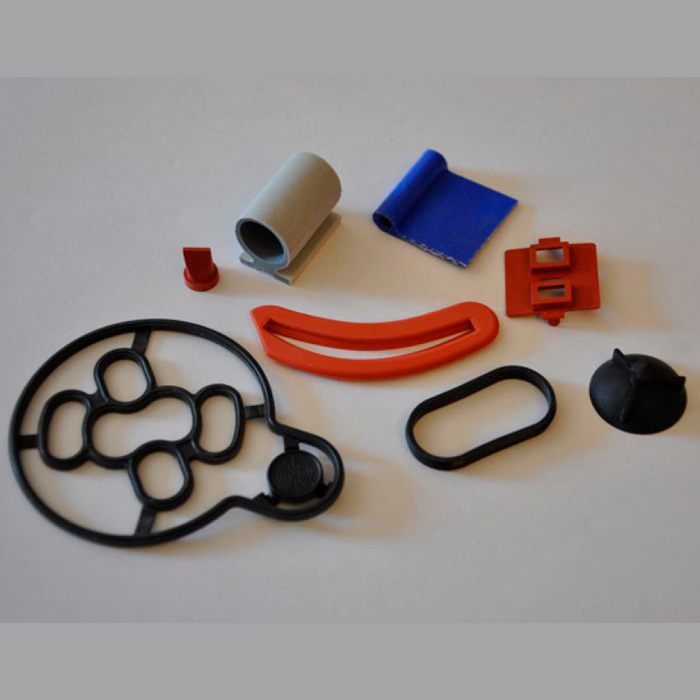
Custom rubber gaskets automotive are necessary to provide leak-proof, vibration-free, and very reliable automobile use. In contrast to other off-the-shelf types of gaskets, engineered gaskets are designed to suit unique specifications, which provide a flawless seal among engine parts, fuel systems, transmissions, radiator, and exhaust systems. They minimize fluid leakage, stabilize the pressure and eliminate the chances of contamination in critical systems.
Recent advances in the automotive field require gaskets capable of withstanding high temperature, chemical interactions, exposure to oil and long periods of mechanical compression. Special compounds used to create custom rubber gaskets include EPDM, NBR, silicone, FKM and neoprene, all of which are designed to fit the operational environment of that particular application. The cutting, molding and extrusion are processes of high level of precision to provide the thickness, hardness and durability. Noise reduction and better vehicle comfort are some other benefits of these gaskets. The more complicated the engines and the EV systems, the more the customized sealing solutions are crucial to ensure efficiency and durability. Personalized automotive gasketing finally contributes to optimum performance, reduced maintenance expenses and overall dependability of the vehicle, hence that they become very necessary to both the manufacturers and service givers.
An experienced auto parts silicone mold supplier to the car part industry provides specialized knowledge to the industry, which produces highly reliable and high precision components complying with high global standards. The reason is that the modern vehicles incorporate silicone which is more resistant to heat and flexibility, more resistant to chemical instability, and due to its electrical insulation characteristics. A well-known supplier guarantees the quality of materials, high technologies of molding and serious quality-control measures to produce the components including seals, hoses, grommets, battery covers, EV insulation part, and lighting gaskets.
Ability of the supplier to provide custom formulations, prototype development and large scale production is critical to the automotive OEMs and Tier-1 manufacturers. Silicone materials of high grade will guarantee long life span even in engines that are highly heat-emitting, exposed to extreme conditions and other mechanical strains. A reputable silicone molding company is also used to minimize production downtime through a dependable lead time, accurate tooling and sound testing procedures. Their engineering services are such that the designs are suitable concerning performance, regulations and safety.
Custom rubber silicone molds play a vital role in delivering high precision, durable and correctly sized components in all industries. When you choose us for your custom mold needs, you are choosing a trustworthy partner committed to precision and quality.
Vehicle industry rubber extrusion & molding is the foundation of vital automotive parts that promote automotive performance, safety and durability. Manufacturers make components like door seals, window channels, weather strips, hoses, vibration dampers, engine mounts, and gaskets, and protective profiles through these processes. The extrusion method is used to create continuous, flexible product shapes, which are ideal in sealing and insulation, whereas the molding method is used to create high precision components essential to mechanical systems. Both involve the use of high-level rubber compounds like EPDM, NBR, SBR, silicone and FKM to make both processes resistant to heat, oil, ozone, chemicals and environmental wear. These rubber parts assist in the elimination of noise, leakage, aerodynamics, and comfort of passengers. Due to the requirement of modern cars (and EVs in particular) and the need of more durable and efficient materials, the quality of rubber extrusion and molding has a direct influence on performance and quality.


