
Fastest Delivery and Low MOQ Development with Money Back Guarantee...
(213)-426-1030
info@customrubbersiliconemolds.com
Fastest Delivery and Low MOQ Development with Money Back Guarantee...

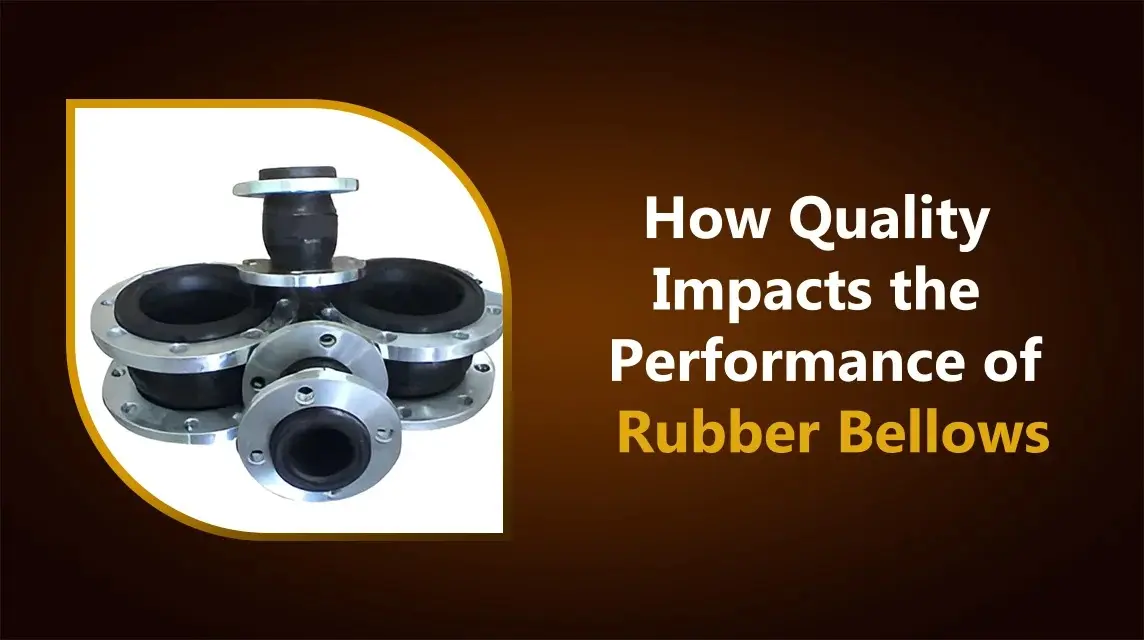
Rubber bellows are elastic joints that assist in the reduction of piping system stress. They absorb vibration, permit movement, and correct minor misalignment in machinery installations. They are essential in the protection of sensitive equipment from damage.
Their operation is a function of the material quality and precise production techniques. The reliable rubber bellows suppliers are keen on employing top-grade rubber and strengthened fabric wraps.
They provide the bellows with power and maintain their flexibility for dynamic purposes. The bellow lengthens equipment life and reduces maintenance expenses.
Rubber bellows quality begins in the selection of raw materials. Manufacturers tend to use abrasion-resistant rubber for long durability and resistance to wear. The rubber can be synthetic or natural, and this depends on the requirements of the application.
Proper construction is necessary to ensure the bellow performs pressure and cyclic movement well. There should be an appropriate thickness to maintain function without endangering cracking or collapse.
Every Molded Rubber Bellows has to comply with certain strength and stretch design specifications. The right tensile strength ensures that the bellow remains intact even when it is subjected to high stress or load. The elongation rate is essential for resistance to tearing while providing smooth movement. Bonding on the fabric or metal layers provides additional resilience during the expansion cycles. They all combine to provide long-term reliability.
The high-quality bellows conform to ASTM, IS, or EN standards for reliable performance. There are certain projects that require compliance with specific specifications provided by the client. The rubber bellows manufacturers design accordingly in such cases. The experts manufacture bellows that undergo successful internal checks and third-party inspection.
Even slight differences in quality can alter the lifetime of the end product exponentially. Any sort of poor design can result in premature wear, leakages, or vibration failure. On the other hand, high-quality rubber bellows shield systems from mechanical stress and pressure surges.
The quality of rubber bellows also impacts their life and system safety. The high-quality materials are resistant to cracking even in harsh conditions with persistent movement. They remain flexible for a long time. These bellows work in both hot and cold temperature conditions.
Most industrial rubber bellows include steel or aramid cords for durability. This support serves to dissipate force and prevent the rubber from over-extending. This is essential in situations where pressure or vibration is continuous. The bellows also cope with misalignment and mechanical movement more effectively.
The poor-quality bellows deteriorate prematurely and pose cost and safety hazards. The cracking results in catastrophic leaks or bursts, frequently causing injury to adjacent equipment. You know that replacing failed bellows is time-consuming and incurs unwarranted expenses. That's why paying for well-constructed rubber bellows is worthwhile in the long run.

The custom rubber bellows undergo a thorough curing and testing process. The curing process rigidifies the rubber structure for reliable flexibility and shape maintenance. The testing verifies for swelling, warping, or observable defects in the build. These processes ensure the bellow can perform the task without fault.
Rubber bellows are required to function with pressure and repeated system movement. The high-quality bellows are able to manage vacuum and internal pressure with reliable consistency in harsh environments.
The material used should bend with ease without creating cracks or thin areas. The construction maintains the operation of the bellows even under extreme temperature fluctuations. The most important factor is the form of the convolution in each bellow.
It takes a precise design to minimize turbulence and achieve consistent airflow or fluid motion. This also reduces pressure loss throughout the system for improved energy efficiency. That's why rubber bellows suppliers pay close attention to precise measurements. The crease and turn must adjust the system's flow and movement requirements.
Flanges and retaining rings are required for correct fit and sealing performance. These components prevent leaks and contain pressure in the designs of closed systems. Misaligned or loose fittings can lead to failure during high-stress operations. This is why professional rubber bellows manufacturing includes careful checks and proper assembly procedures.
The bellows are manufactured to stretch and revert without damage. They sustain dynamic motion while excluding dirt, dust, and water. In any industry, pressure performance is not negotiable when it comes to safety.
Many rubber bellows manufacturers are well aware of this and make it with utmost attention. They test each bellow for strength, flexibility, and tight sealing.
Safety is among the most important aspects of rubber bellow uses. Good-quality bellows minimize risks by avoiding snaps, bursts, or collapses at any time. All these could cause severe injury or extensive property loss during operations. The construction makes the bellows function under pressure without risky outcomes. Therefore, proper safety checks are never omitted in reliable production.
All Molded Rubber Bellows are subject to a series of safety tests before use.
The testing eliminates weak units before reaching consumers.
The certifications prevent faulty bellows from entering critical systems. The international standards have products that fulfil safety and design standards. Certified industrial rubber bellows tests prevent systems from unsafe or poorly constructed components within any industry.
Their regulations call for full documentation and quality control at each step of the manufacturing process. This allows industries to be confident in the safety of their components entirely.
The industries typically order custom rubber bellows meeting specific safety codes and system requirements. In those situations, even more stringent controls and additional testing might come into effect.
The good rubber bellows suppliers go the extra mile to provide long-term durability under tough conditions. They know that even slight defects lead to system failure. That's why they never compromise standards or material checks at any step of the process.
Are you looking for trusted rubber bellows suppliers? You can choose partners who deliver tested and high-quality bellows for maximum durability and performance. Contact us to get a quote and secure your supply today.