What Are the Essential Specifications of Rubber and Silicone Products?
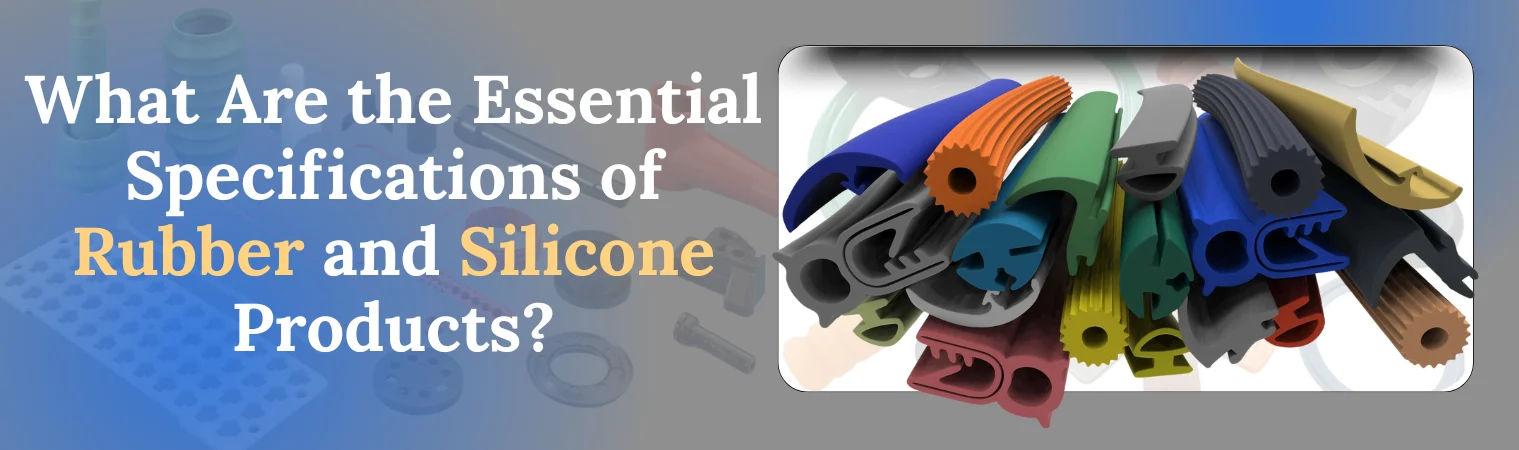
Manufacturers, designers, and engineers engaging seals, gaskets, and molded parts must know rubber and Silicone Product Specifications. The specifications cover properties such as hardness, tensile strength, thermal limits, and chemical resistance, which in turn ensure that the products will perform reliably within their intended use. The right kind of information helps in terms of choosing material, quality control, and meeting industry standards.
At RUBBER SILICONE MOLDS, all specifications are used to guide every project to provide durable, high-quality components for industrial, automotive, and medical applications.
What Are the Standard Specifications for Rubbers Used in Industry?
Rubber components in industry follow standard specifications for uniform performance. Important properties include: Hardness (Shore A or D), tensile strength and elongation, tear resistance, compression set, thermal stability, electrical insulation, and chemical compatibility are other important considerations, depending on the nature of the application. Industry standards such as ASTM, ISO, and DIN clearly outline the procedures for testing rubber materials and for assessing their quality. Compliance with these standards will ensure that all rubber components, seals, gaskets, hoses, and vibration dampers are long-lasting, safe, and reliable in many industrial applications.
What Are the Differences between Silicone Product Specifications from Rubber Products?
Silicone shares a number of characteristics with rubber, but comes with even better advantages:
- Temperature Range: Keeps much higher and much lower temperatures than ordinary rubber.
- Flexibility: Keeps elastic in extreme conditions and still performs well.
- Chemical and UV Resistance: Good against oils, chemicals, and sunlight.
- Clarity and Purity: Food-grade and medical applications where something non-reactive is important.
- Molding Performance: Precision and stability for really complex shapes.
Because of the above properties, silicone has become the material of choice for those applications where high heat, chemical exposure, or extremely precise performance is required, for which regular rubber might not be functional.
What Hardness (Shore A or D) Values Are Typical for Rubber and Silicone Parts?
Hardness is a crucial specification for both rubber and silicone components; it can be measured using either Shore A or Shore D, depending on the material. In general, Shore A is for softer, flexible parts such as gaskets, seals, and hoses, under a range of 20 to 80. Shore D is for very hard, stiff products, such as industrial rollers or structural components, generally between 30 and 70. Selecting the right hardness is important in ensuring that components withstand the forces of compression, bending, and fatigue, which, when applied, ensure durability, flexibility, and a longer service life.
What Are the Standard Testing Methods for Rubber and Silicone Specifications?
Performing tests to ensure that rubber or silicone meets specifications is a very important step. The following are the most common ones:
- Shore Hardness Testing: Determines how soft or hard the material is (ASTM D2240).
- Tensile and Elongation Tests: Measure a material’s strength and how far it can stretch before breaking (ASTM D412, ISO 37)
- Tear Testing: Evaluates how well a material resists tearing under stress or in thin sections.
- Compression Set Determination: Measures how well seals maintain their shape under compression
- Thermal Aging Study: Tests whether the material has deteriorated during extended heating.
- Chemical Exposure and Swelling Tests: Tests for compatibility with oils, fuels, acids, and solvents.
What Chemical Resistances Are Specified in Rubber and Silicone Datasheets?
Chemical resistance is a key factor when selecting rubber and silicone materials. A datasheet lists the resistance of the material towards acids, bases, oils, fuels, solvents, and cleaning agents. Silicone can tolerate extreme heating and a large amount of ultraviolet radiation, while some kinds of rubbers may be much better than silicone in mechanical strength or abrasion resistance. The knowledge of chemical resistance helps to select the suitable material for the manufacturer to ensure that seals, gaskets, and molded parts maintain integrity and do not leak, and operate safely in hostile environments.

Why Choose Rubber Silicone Molds
At Rubber Silicone Molds, we are driven by core values that guide our business and define our commitment to our clients.

Expertise and Experience - With years of experience in the Rubber Silicone Molds industries, we have the expertise to deliver custom-designed solutions that meet the most demanding requirements.
High-Quality Products - Our Bellows are made from high-quality materials, ensuring durability, clarity, and long-lasting performance.
Custom Solutions - We specialize in providing tailored Rubber Silicone Molds solutions that meet the unique needs of our clients.
Exceptional Customer Service - We provide end-to-end support, from initial consultation to post-delivery assistance, ensuring our clients are delighted with the results.

Conclusion
It is very necessary to understand the specifications of rubber and silicone products for the design of reliable, durable, and safe components. Hardness, tensile strength, elongation, tear resistance, thermal stability, and chemical compatibility all contribute to proper material selection for meeting industry standards, while testing and evaluation of data sheets ensure that quality is consistent.
Rubber Silicone Molds follows these specifications to manufacture high-performance products for industrial, automotive, and medical applications. With precise specifications and expert guidance, their rubber and silicone components deliver dependable, consistent, and long-lasting performance.
Get the Right Advice from Our Experts
Call Rubber Silicone Molds at +1(646)-814-4070 or have your project analyzed by emailing info@rubbersiliconemolds.com.
Get In Touch
137-1140 Burnhamthorpe Rd. W | Mississauga ON L5C 0A3 | Canada
Popular Links
© RUBBER SILICONE MOLDS. All Rights Reserved.


