Extruded vs. Molded Rubber
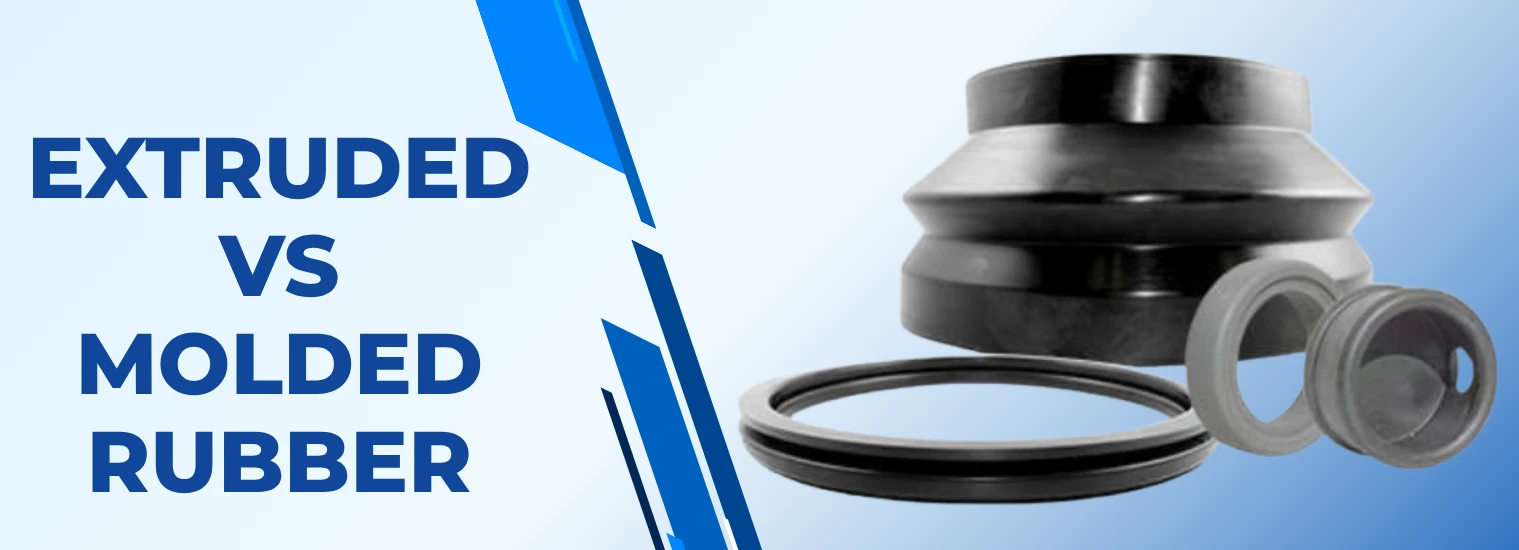
Extruded and molded rubber are essential for protecting equipment, connections, and delicate parts against dust, shaking, and damage from the surroundings. They provide flexibility and long life in a variety of uses, including vehicles, electrical setups, factories, and medical devices. But problems occurring during production can impact how well they work, how long they last, and how trustworthy they are. Recognizing these typical concerns and using preventative measures is very important for keeping up good production quality.
Understanding Rubber Extruded and Molded Differences
Understanding the differences between rubber extruded and rubber molded parts is important when you are choosing the right process for your product. Both methods use rubber compounds, but the way they are shaped, the type of products they create, and their ideal applications are quite different. Knowing these differences helps you get better performance, lower cost, and fewer quality issues.
What Is Rubber Extrusion?
Rubber extrusion is a continuous manufacturing process. In this method, uncured rubber is pushed through a die with a specific shape, similar to squeezing toothpaste out of a tube. The shape of the die decides the final profile of the part. After extrusion, the rubber profile is usually cured (vulcanized) in an oven, salt bath, hot air tunnel, or autoclave to give it strength, elasticity, and stability. The extruded parts can then be cut to length, joined, punched, or further processed as required.
What Is Rubber Molding?
Rubber molding is used to make three-dimensional parts with more complex shapes. In this process, a specific amount of uncured rubber is placed into a mold cavity, the mold closes, and heat and pressure are applied. The rubber flows to fill the cavity, then cures into the final shape. Common molding methods include:
- Compression molding
- Transfer molding
- Injection molding
Difference between Extrusion & Molding
1. Shape and Design Complexity
One of the main differences between extruded and molded rubber parts is shape capability. If your part needs a constant profile and longer length, extrusion is usually the better choice. If your part needs complex geometry or precise sealing surfaces, molding is typically the right process.
a) Extruded parts
- Best for simple, continuous profiles.
- Cross-section remains the same throughout the length.
- Ideal for long seals, strips, and hoses.
b) Molded parts
- Perfect for complex, 3D shapes.
- Can include holes, grooves, ribs, varying thicknesses, and detailed features.
- Ideal when you need tight dimensional control and specific functional areas.
2. Tooling and Production Volume
Extrusion and molding also differ in tooling (dies or molds) and economic suitability. If your product is a simple seal needed in various lengths, an extrusion die is usually affordable and flexible. For shaped components needed in high volumes, investing in a mold becomes more economical.
a) Extrusion tooling (dies):
- Generally simpler and less expensive than molds.
- Suitable for small to large production volumes.
- Good option for custom profiles and frequent length changes.
b) Molding tooling (molds):
- More complex, with multiple cavities, ejector systems, and precision machining.
- Higher initial investment, but very cost-effective for large volumes.
- Ideal for repeat orders with tight tolerances.
3. Tolerances and Surface Finish
When you need exact fit and reliable sealing, molded parts usually perform better. When flexibility in length and moderate tolerances are acceptable, extruded parts work very well.
a) Extruded rubber parts:
- Tolerances depend on material, die design, and process control.
- Slight variations in size and shape can occur along the length.
- Suitable for applications where small size variations are acceptable (like door seals or edge trims).
b) Molded rubber parts:
- Better dimensional control and repeatability.
- More suitable for critical sealing and functional surfaces, like O-rings and precision gaskets.
- Surface finish can be controlled by mold texture and polishing.
When to Choose Which?
Choose Rubber Extrusion When:
- You need long, continuous seals, strips, or hoses.
- The cross-section is constant along the length.
- You want easy customization of lengths and joints.
- Cost-effective production of profiles is important.
Choose Rubber Molding When:
- You need 3D shapes or complex geometries.
- Tight tolerances and specific sealing surfaces are critical.
- The part has features like holes, grooves, or varying thickness.
- You are planning medium to high production volumes with repeatability.

Why Choose Custom Rubber Extrusion?
At Custom Rubber Extrusion, we are driven by core values that guide our business and define our commitment to our clients.

Expertise and Experience - With years of experience in the Extrusions industries, we have the expertise to deliver custom-designed solutions that meet the most demanding requirements.
High-Quality Products - Our ExtrusionsExtrusions are made from high-quality materials, ensuring durability, clarity, and long-lasting performance.
Custom Solutions - We specialize in providing tailored Extrusions solutions that meet the unique needs of our clients.
Exceptional Customer Service - We provide end-to-end support, from initial consultation to post-delivery assistance, ensuring our clients are delighted with the results.

Conclusion
Rubber extruded and molded parts serve different needs, even though they use similar materials. Extrusion is ideal for long, continuous profiles with constant cross-sections, while molding is perfect for complex, precise, and three-dimensional components. By understanding these differences, you can choose the right manufacturing process for your seals, gaskets, profiles, and custom rubber parts, ensuring better performance, reliability, and value for your application.