Common Rubber Extrusion Defects & Solutions
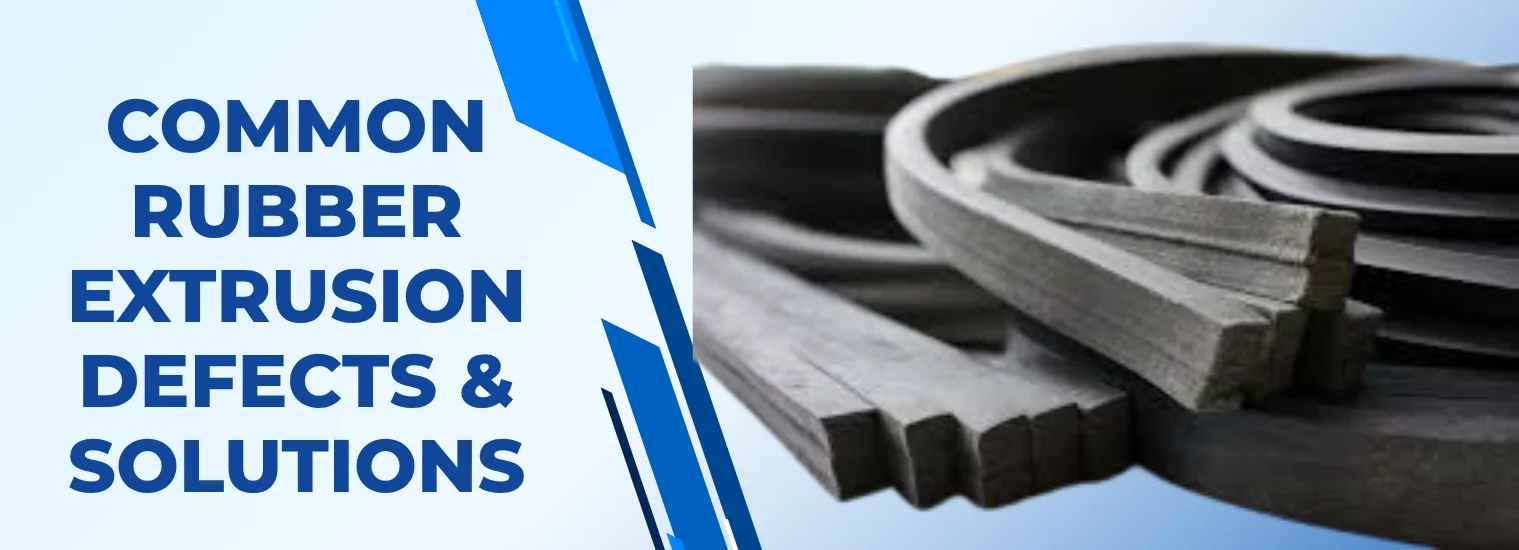
Rubber extrusion is the standard method that is typically used to manufacture various profiles, tubes, cords, seals, and gaskets. However, small changes in temperature, pressure, or material quality can cause defects in the final product. These defects might result in leakage, poor fitment, early failure, and increased scrap or rework costs. Being familiar with these frequent problems along with their prevention leads to stable operation, enhanced sealing, and longer service life. Below are the most common rubber extrusion defects and the best solutions that will help in reducing rework and production downtime.
A1. Surface Roughness and Poor Finish
Surface defects deteriorate the visual appearance as well as the quality of the extruded profile. Besides that, they can eventually lead to functional problems in sealing applications.
Possible causes:
- Low compound plasticity.
- Incorrect die temperature.
- Moisture in the compound.
- Poor mixing of raw material
Solution:
- For better flow, change the barrel temperature to a higher setting.
- Good mixing will help filler dispersion in the compound.
- Optimize die design and polishing.
- If the extrusion speed is too high, reduce it.
2. Die Swell (Expansion After Exiting the Die)
The extruded rubber will expand to a greater extent than anticipated once it leaves the die. As a result, this will lead to dimensional inaccuracies or oversized profiles.
Possible causes:
- Elastic recovery of rubber as it exits the die
- Extremely fast extrusion speed
- Highly elastic compound because of the formulation
- Inadequate die design for the chosen material
Solution:
- Lower the extrusion pressure and speed
- Adjust the viscosity of the compound
- Use proper curing agents and processing aids.
- Modify the die dimensions to compensate for the expected well.
3. Dimensional Variation and Poor Tolerances
The extruded parts have a different size than the specified tolerances. Along the length, profile thickness, width, or diameter changes. It lowers the accuracy of the product and, thus, the rejection rate increases.
Possible causes:
- Inconsistent extrusion speed or pressure
- Unstable temperature control along the barrel or die
- Uneven die wear or improper die centering
- Variations in compound batch quality (viscosity changes)
- Inconsistent cooling conditions
Solution:
- Maintain stable extrusion temperature and speed.
- Re-align, polish, and balance the die.
- Use controlled cooling systems.
- Check compound viscosity consistency.
4. Porosity (Air Bubbles or Voids)
Small air pockets or tiny holes are formed inside the rubber which is extruded. These pores make the product weak, and its sealing performance also gets lower.
Possible causes:
- Moisture in raw materials or compounds
- Volatile components in the formulation
- Trapped air during compounding
- Overheating of the compound in the extruder
- Poor venting in the extruder (for vented systems)
Solution:
- Pre-dry the rubber compound.
- Improve kneading and mixing to eliminate trapped air.
- Adjust blowing agent levels.
- Apply vacuum venting to remove gases.
5. Cracks & Splits
Visible imperfections, such as cracks or splits, can emerge on the rubber's surface. These defects significantly weaken the finished product and shorten its overall lifespan.
Possible causes:
- Excessive shear or stress in the die
- Incorrect curing system (too aggressive or too slow)
- Overheating during extrusion or curing
- Poor compatibility of ingredients in the compound
- Environmental attack (ozone, UV) for exposed rubber
Solution:
- Raise the extrusion temperature gradually.
- Improve curing formulation and crosslinking.
- Check for contamination in the compound.
- Reduce extrusion shear by lowering screw speed.
6. Sink Marks (Depressions on the Surface)
Small depressions often form on the surface of thick rubber extrusions, giving the profile an uneven or imperfect appearance.
Possible causes:
- Uneven cooling during the extrusion process
- Excessive material in thick sections
- Improper die design or flow imbalance
- Low extrusion pressure or speed
- Inadequate curing or vulcanization control
Solution:
- Optimize the cooling rate for uniform shrinkage.
- Adjust compound formulation for better flow.
- Reduce section thickness where possible.
- Maintain consistent curing and cooling cycles.
How to Prevent Extrusion Defects Overall
The comprehensive approach to preventing defects begins with careful management of the entire extrusion operation, from the initial material selection to the final cooling stage. Key steps to prevent these issues involve:
- Maintain consistent rubber compound quality.
- Ensure proper mixing and dispersion before extrusion.
- Use stable process parameters like temperature, screw speed, and pressure.
- Polish and calibrate dies regularly.
- Use proper cooling or curing after extrusion.
- Monitor the viscosity and plasticity of rubber.
- Keep machines clean to avoid contamination.

Why Choose Custom Rubber Extrusion?
At Custom Rubber Extrusion, we are driven by core values that guide our business and define our commitment to our clients.

Expertise and Experience - With years of experience in the Extrusions industries, we have the expertise to deliver custom-designed solutions that meet the most demanding requirements.
High-Quality Products - Our ExtrusionsExtrusions are made from high-quality materials, ensuring durability, clarity, and long-lasting performance.
Custom Solutions - We specialize in providing tailored Extrusions solutions that meet the unique needs of our clients.
Exceptional Customer Service - We provide end-to-end support, from initial consultation to post-delivery assistance, ensuring our clients are delighted with the results.

Conclusion
Knowing typical rubber extrusion defects and putting the correct remedies into practice can significantly enhance product functionality, minimize waste, and ensure premium quality. It does not matter if you are a manufacturer or buyer as paying attention to material selection, meticulous die design, and rigorous process control will not only reduce potential issues but also guarantee durable and reliable extruded rubber profiles for your applications.